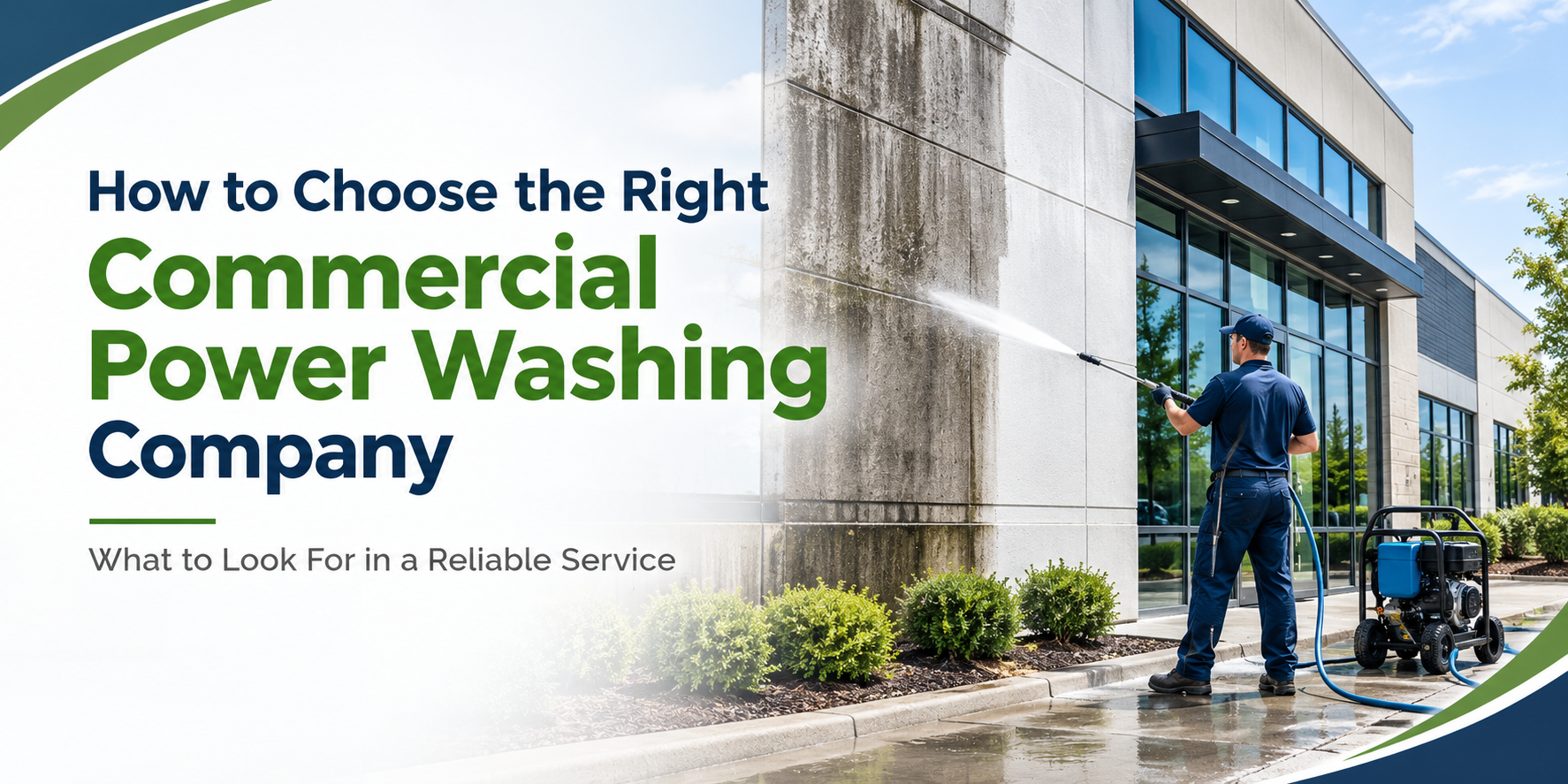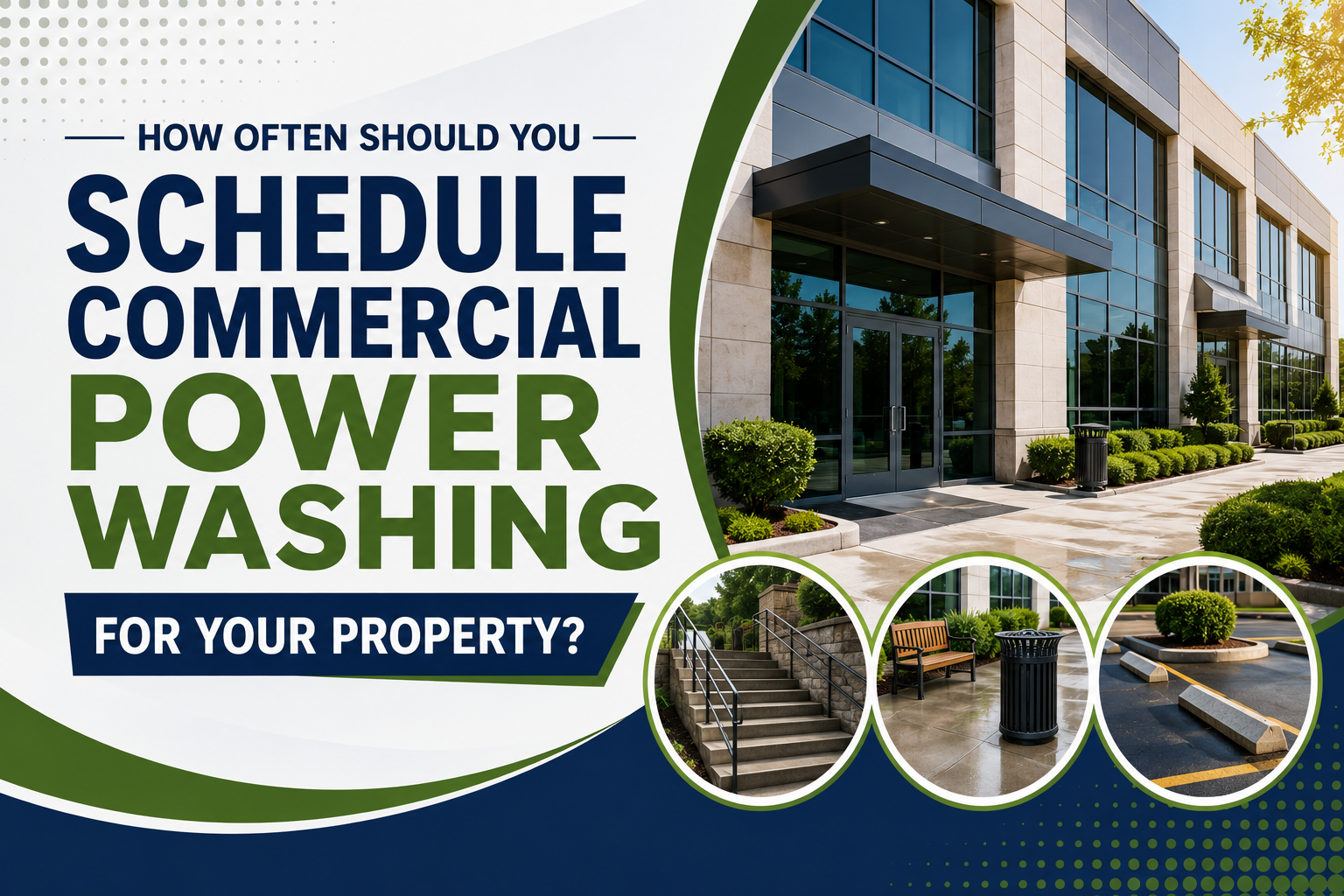
A business property speaks volumes of a company through its physical appearance. The state of the sidewalks (dirty or cleaned), the condition of the concrete (stained or not), the presence of green algae on the walls, and clean or grimy entrance to the building are all things that can be noticed even before the customer is allowed in the shop if the premises are really nicely maintained. Routine commercial pressure washing cleaning is an effective business way to keep the exterior areas of the premises cleaner in a more sustainable manner through supporting maintenance of the property as a whole.
The issue is more than just appearance. The surfaces outdoors get covered with dirt, oil, highway residue, organic growths, and other dirty stuff gradually. In paved areas, rainwater can also take away and drop pollution into drainage, local water bodies, etc. According to the U.S. Environmental Protection Agency, runoff from parking lots, roads, and other hard surfaces often carries along polluting stuff like sediment, oil, grease, and chemicals, too.
1. Create a Better First Impression
Customers often spot the appearance of a place very fast if they can see it when approaching a property. An attractive and clean entrance together with a neat sidewalk, well-kept parking place and attractive window display may give the impression that a property is more orderly and cared for.
This is important for various kinds of businesses such as restaurants, retail stores, offices, warehouses, medical facilities, and service businesses. Regular cleaning of the outside doesn’t serve as a replacement for maintaining good property condition but can be considered the major element of overall property management.
Professional commercial power washing is effective when it comes to removing dirt where it shows up the most, for example
- store windows and building surfaces
- sidewalks and entrances
- parking spaces
- concrete footpaths
- area around Dumpsters
- warehouse walls
2. Protect Exterior Surfaces From Long-Term Buildup
Outdoor surfaces are subject to varied weather conditions throughout the year. Gradually, factors like rain, snow, humidity, vehicle traffic, and airborne debris can result in accumulation of dirt.
Dirt and Organic Growth
Mold, mildew, algae and other organic growths can cause siding, concrete, and other surfaces to lose their bright, clean look. Cleaning becomes more challenging as the buildup goes undetected for longer periods.
Different cleaning methods are suitable for different materials so be sure to decide on the most appropriate one before getting down to work. Pressure washing might do the trick if your surface is very hard and tough but softer materials might need an altogether gentler and lower-pressure cleaning technique.
Oil, Grease and Road Residue
Car parking lots and drive lanes are exposed to vehicle traffic day after day. It’s really hard not to spill oil, leave tire marks, or drop dirt, especially in winter when the road is salted and the weather is harsh. These kinds of things get stuck to concrete floors, and other hard surfaces. Cleaning on a regularly basis can keep these areas looking cleaner and easier to maintain.
3. Improve Safety Around the Property
Keeping pedestrian areas clean can also be part of regular maintenance work. Dust, organic material, oil, and other residue may damage high-traffic parts.
Cleaning by contractors ought to include a focus on safety as a main element. According to OSHA, possible hazards involve high pressure water jetting, leaks or uncontrolled hoses.
There are even recommendations such as the correct types of personal protective equipment, and regular checks of the water equipment and connections before use.
From a business perspective, this is another good reason to treat commercial cleaning operations as planned routine work instead of a weekend “do-it-yourself”
4. Support Better Stormwater Management
Paved surfaces like parking lots, sidewalks, and rooftops are impermeable because water does not pass readily through them. These impervious surfaces are areas from which runoff collects and flows after rainfall or snow melt, potentially picking up contaminants during the process.
EPA tells us that urban runoffs can carry sediment, oil, grease, heavy metals, and other materials from roadways or construction areas, and deposit these into water bodies.
Better awareness of where the wash water is going, prior to cleaning outdoor areas, is essential for every business. Depending on the property and the local rules, the runoff might have to be restricted, gathered, purified, or disposed of via an authorized facility. Some kinds of industries have to comply with stricter requirements from the EPA, such as the regulation of runoff from a wash water source or the complete removal of storm water pollution before it is allowed to be discharged into the storm drains or the surface waters.
5. Maintain High-Traffic Areas More Effectively
Of course, not every part of a commercial property gets dirty at the same time.
You should expect to find higher dirt levels and damage on entranceways, sidewalks, loading docks, parking areas, and dumpster sites because such places are more frequented than the less accessible outdoor areas.
Well-thought-out regular cleaning of these high-volume zones can replace the whole-place dirtying scenario if left unchecked to accumulate over time.
Of course, the cleaning frequency could be tailored based on the nature of the property itself seasonally, annually, or at even shorter time intervals between.
Read More: The Complete Guide to Commercial Power Washing
5. Take Pressure Off Employees
Commercial property cleaning often involves not only various cleaning equipment but also, surface preparation, crowd control for safety reasons, water management, and of course, a considerable amount of time.
Assigning an untrained staff person to wash away all the accumulated dirt on the exterior of the building can be a distraction for that person from his/her regular work duties.
In fact, professional commercial power washing who are hired to do only that job can be very efficient and do it properly.
Meanwhile, the remaining staff can be more concentrated on serving customers, supporting the operations of the business, working with the inventory, or performing administration tasks that all contribute directly to the performance of the business.
7. Build a Maintenance Routine That Is Practical
A commercial pressure wash service that functions as planned will be far more effective when it’s a regular part of upkeep rather than merely addressing an emergency after the fact.
How often you should do it will vary based on multiple factors. Examples include:
- Property Type and Size
- Foot and Vehicle Traffic Volume
- Climate Local to the Area
- Surface Materials
- Trees and Vegetation on site
- Presence of Oil, grease or other contaminants
- Build-up with Season
A highly frequented store can be cleaner less often than an office building that doesn’t get many people. Keeping track of the property through regular inspections every few months will make it easy to spot the dirty areas and clean them up before the dirt is too bad.
What Should a Commercial Property Have Cleaned?
In fact, an outside care schedule can encompass several elements besides the building walls. Companies might also benefit from having their shops, footwalks, concrete, parking lots, dumpster pads, entrances, and warehouse exterior kept in good condition.
The type of cleaning must also suit the substrate. In addition to the above example the method may also be suitable for painted wood siding or any other fine exterior surface.
Keep Exterior Maintenance on the Business Checklist
A clean commercial property doesn’t only mean appearance. Regular exterior cleaning can help protect surfaces, keep walkways looking safer, get high-traffic areas back into good shape, and handle run-off in a more responsible way.
Located in Northeast Ohio, business clients like yours who are looking for a company that provides exterior commercial cleaning services will be able to get in touch with Forest City Power Washing and have all of the following done: storefronts, parking lots, building facades, warehouses, sidewalks, entry areas, and maintenance options that are repetitive, just to name a few.
In fact, through regular property maintenance, if a business owner knows the cleaning service that they are relying upon, he or she gets ahead of the game and tackles cleaning tasks before issues start appearing and turning into bigger problems.
Frequently Asked questions
How often should commercial properties be power washed?
The rule is there’s no rule! Some commercial properties that get the most amount of pedestrian traffic might have the need to get the place cleaned at least one, even a couple, times a year whereas other structures that are in lesser use could easily get the whole building power washed once per annum or only when necessary depending on whether the surface is still pristine or weathering and the climate of the area.
Is pressure washing of commercial structures a safer process?
The answer could be it will depend, i.e., whether the type of pressure is right, the nozzle is chosen right, the cleaning method and the equipment fit the surface well. Sometimes you have delicate ones where you might end up having to resort to soft-washing or any other technique other than aggressive pressure as a means of cleaning.
What kind of surfaces can be cleaned?
The major places are the concrete sidewalks, parking lanes, storefronts, the facade of the building, entrance areas, and dumpster areas. What cleaning style is used will vary depending on the kind of material and the condition thereof.
Can commercial power washing remove oil and grease effectively?
Commercial cleaners are able to remove a range of surface-level contaminants such as oil and grease through professional cleaning methods. If the stain is very heavy, the cleaner might need to resort to using special cleaning agents, and it could also be necessary to repeat the cleaning process several times.
What things should a business keep in mind before hiring a service provider?
The business entity should check if the surfaces that will need cleaning are suitable for those cleaning methods in addition to the amount of dirt and grime that they may remove. They also need to think about customers, employees, etc., the weather forecast, water supply, and, of course, the proper disposal of the wastewater after washing is done. Some special or stormwater requirements might also apply to industrial or controlled sites.