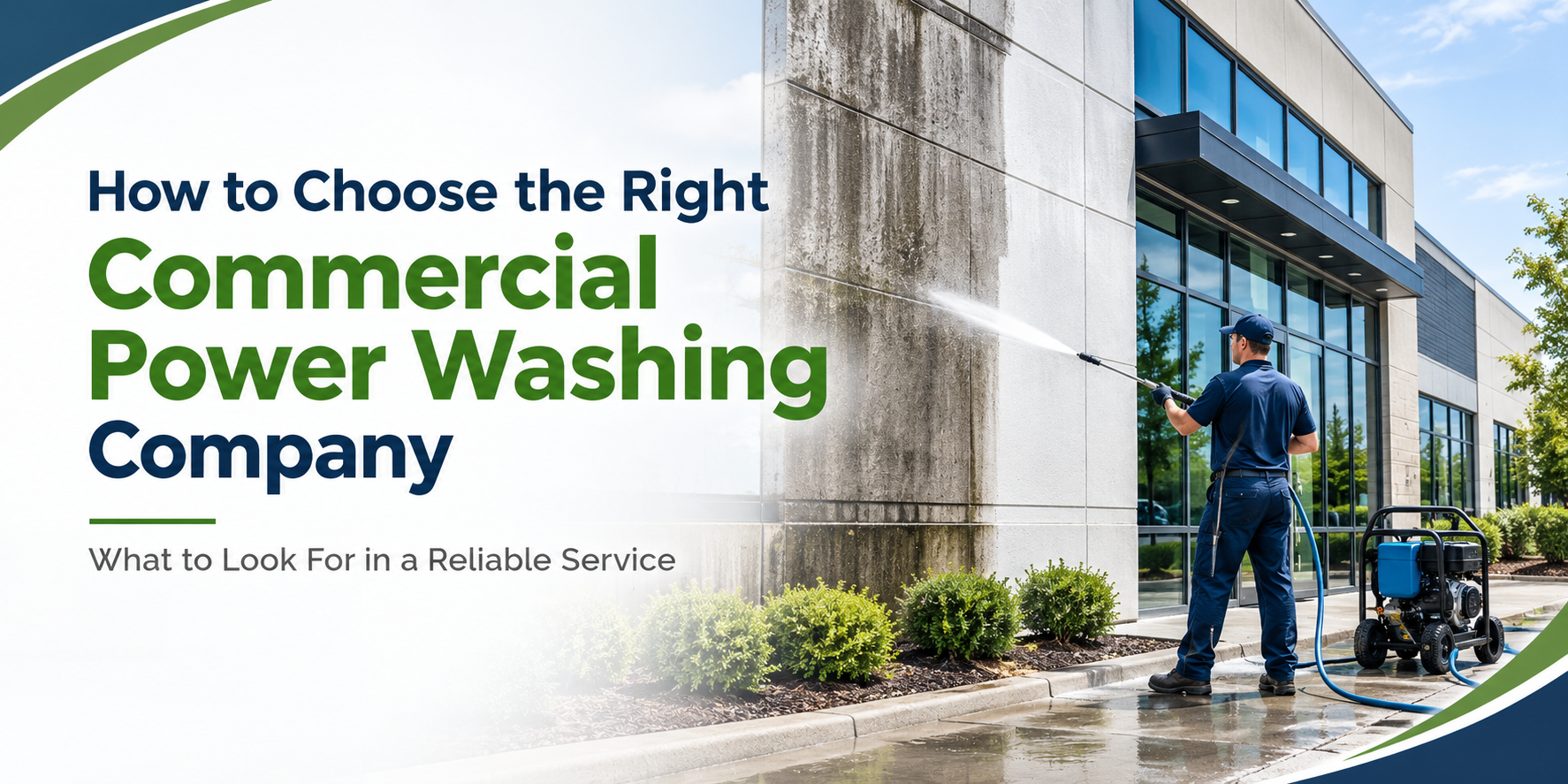
Dirty store signs, oily parking lot streaked, dusty and dull industrial warehouses can not only be visual offenses but also they can be silent messages to the customers and tenants stating that business is negligent.
Regular servicing of the outside of the premises is a really simple measure for preserving the asset’s value commercially, and the primary technique of maintenance is the use of commercial power washing. However, the most difficult part about this for the majority of the building owners and the managers is the frequency issue which remains unanswered even after the decision of cleaning has been made.
This article prepared on the basis of expert opinion with the help of Forest City Power Washing team, will help you estimate an achievable cleaning plan that accounts for the property type, climate conditions, and people’s traffic flow, so that this aspect will be something that you have planned for rather than have to respond.
Why Cleaning Frequency Matters More Than a One-Time Wash
A single cleaning is only cleaning what’s already there. A cleaning schedule is a preventive measure that actually stops dirt and grime from accumulating. Surfaces in Northeast Ohio exposed to harsh winter’s freeze-thaw, spring pollen, and summer humidity start collecting algae, mildew, and dirt at varied paces depending on the kind of material they are made of, the level of sun exposure, and the type of drainage. If left untouched, the dirt can cause concrete to be etched, sealants to be degraded, and the life span of siding and pavement to be shortened.
Keeping up a commercial pressure washing routine as well reduces liabilities at the site. Oil residue and algae forming on walkways and parking areas constitute slip risks, and numerous insurance policies and local guidelines stipulate that the owners maintain the exteriors of their properties as much as is reasonably achievable.
How Often Should You Schedule Commercial Power Washing?
Of course there’s no one-size-fits-all approach, but by and large commercial properties tend to be cleaned following one of three intervals: weekly, monthly or even less frequent twice a year. The table below shows typical recommendations for different types of properties based on the cleaning frequency.
| Property Type | Recommended Frequency | Primary Reason |
| Restaurants & food service | Monthly | Grease buildup, dumpster pads, high foot traffic |
| Retail storefronts | Quarterly | First-impression areas, sidewalk grime, seasonal dirt |
| Office buildings & lobbies | Quarterly | Consistent professional appearance for tenants and visitors |
| Parking lots & garages | Quarterly to semi-annually | Oil stains, tire marks, salt residue in winter |
| Warehouses & industrial sites | Semi-annually | Large surface area, less foot traffic, dust accumulation |
| Apartment complexes & HOAs | Quarterly | Shared common areas, curb appeal for residents and prospects |
These figures are a starting point. A restaurant near a busy intersection may need more frequent attention than one in a quiet plaza, and a warehouse loading dock that handles constant truck traffic may need extra visits regardless of the season.
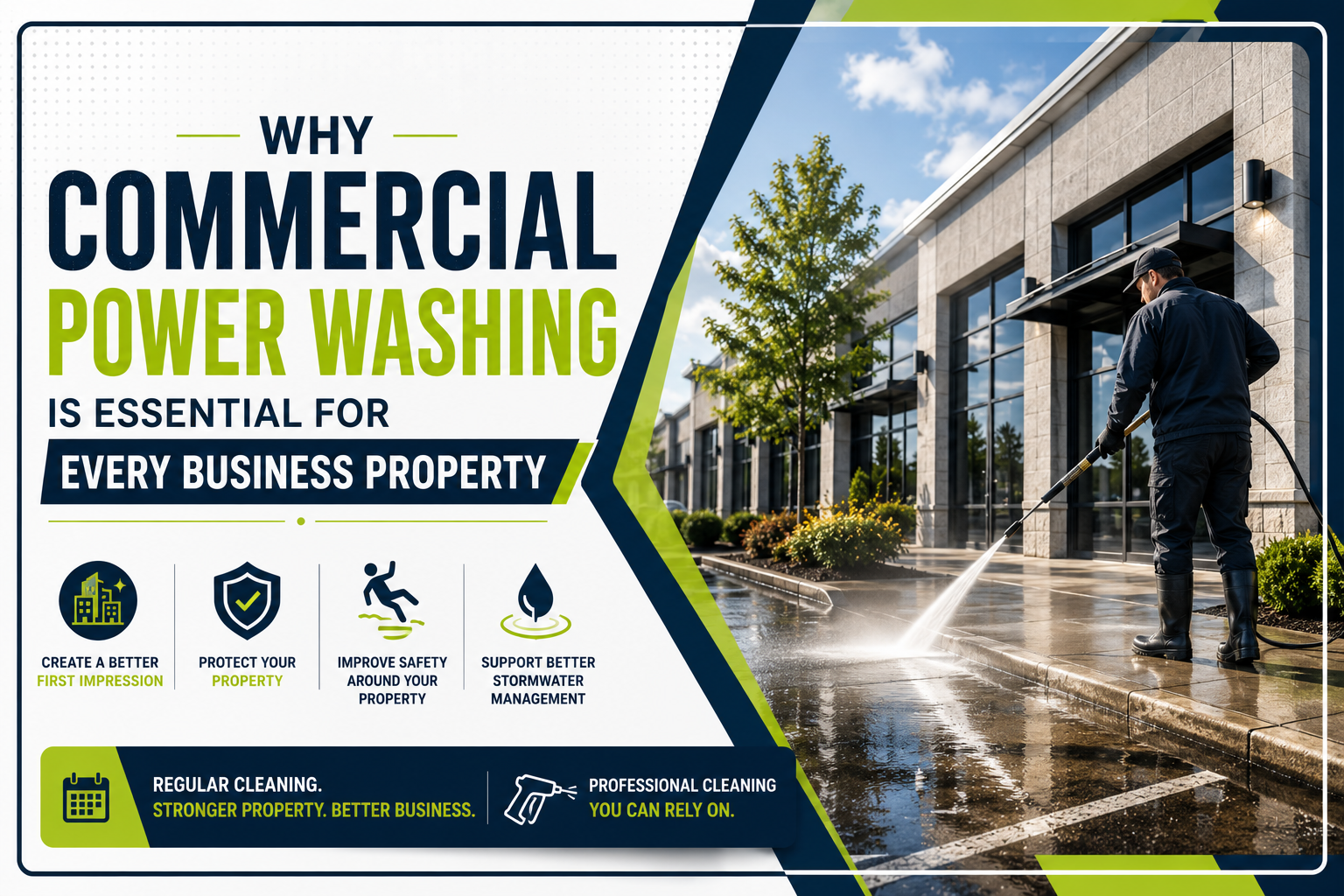
Read More: Why Commercial Power Washing is Essential for Every Business Property
Factors That Push a Property Toward More Frequent Cleaning
Traffic Volume
A large amount of foot or vehicle traffic causes dirt to collect faster. For example a retail entrance frequented by hundreds of people a day gets worn faster than a low-use office annex.
Surface Material
Unsealed materials like concrete and brick get stained quicker due to moisture and organic material. These areas are often cleaned less than sealed surfaces that don’t let the surface take up the liquid.
Seasonal Exposure
In the westerly side of the Great Plains, road salt and repeated frost and melts cause residues and cracks on lower building walls and parking lots. In spring, pollen and summer algae are other reasons which contribute to buildup.
Nearby Vegetation and Drainage
The presence of nearby trees or bad drainage accelerates the formation of algae, moss and mildew on shaded walls, driveways, etc.
Signs Your Property Needs Cleaning Sooner Than Planned
- Black or Green algae streaks
- Oil stains or tire traces that have blackened in the parking areas
- Smells coming from the vicinity of the bins or the loading doors
- Wet patches on the shaded or the damp paved roads
- Dirty exterior signs that get pale and lack luster when the dust accumulates
If two or more of such issues are visible simultaneously or shortly after a clean-up, don’t wait for the due date in the calendar and proceed immediately to the cleaning service next.
Building the Maintenance Plan That Really Works
For the majority of the businesses and property owners, periodic cleaning is significantly cheaper than sporadic ones. The frequency of the visiting of the property can lead to constant maintenance of the exterior and saving of the time and labor for checking cleaning reminders internally. Most property managers handling multiple buildings report quarterly maintenance plans as the most effective from the viewpoints of the visual effect, financial budget, and staff working hours.
Final Thoughts
Professional commercial cleaning should not just be a quick annual cleaning. It is one of the consistent ways businesses protect their real estate, aesthetics, safety, as well as the value they are going to get from it in the far future. Deciding how often you will clean your property is important for maintaining its good looks during the cold seasons as well as in summer. By regularly cleaning the dirty areas with the power washer according to the level of foot traffic, type of materials, and the extent of exposure to weather changes one can keep the building as shiny as new throughout the year. Northeast Ohio commercial enterprises that team up and work regularly with reliable commercial power washing services providers, such as for instance Forest City Power Washing, are often those clients that do not require a lot for unexpected emergency repairs and are the kind of business owners who rather get to work rather than spending their time on cleaning or maintaining their premises
Frequently Asked Questions
1. How often should a commercial parking lot be power washed?
Most parking lots benefit from quarterly to semi-annual cleaning, with more frequent visits recommended for lots that see heavy vehicle traffic or accumulate road salt during winter months.
2. Is commercial power washing different from residential pressure washing?
Yes. Commercial jobs typically cover larger areas, involve scheduling around business hours, and often require different equipment for parking garages, loading docks, and multi-story exteriors.
3. Does regular power washing extend the life of a building’s exterior?
It can. Removing algae, mildew, and chemical residue before it embeds into concrete, brick, or siding slows material degradation and reduces the need for costly repairs later on.
4. What’s the best time of year for commercial pressure washing services?
Spring and early summer are popular for removing winter salt residue and pollen, but a consistent quarterly or seasonal schedule works better than a single annual cleaning.
5. Can cleaning be scheduled outside regular business hours?
Yes. Many properties prefer early morning, evening, or weekend appointments to avoid disrupting customers or daily operations, and most providers can accommodate that.